
Data Enrichment
|2026-02-23
12 Best Data Enrichment Tools for B2B Teams in 2026
We evaluate the 12 best data enrichment tools on the market based on data coverage, accuracy, integrations, and pricing to help you find the right platform for your revenue engine.
In today's competitive B2B market, the quality of your data directly impacts your revenue. Stale, incomplete, or inaccurate records don't just slow down your teams; they actively kill deals, waste marketing budgets, and sabotage your entire go-to-market strategy. Bad data is a silent pipeline killer, leading to misrouted leads, irrelevant outreach, and missed opportunities.
Data enrichment is the solution. It's the process of appending, correcting, and improving your existing records with fresh, accurate information from third-party sources. The right tool can turn a simple email address into a rich profile, complete with company size, technology stacks, direct-dial phone numbers, and buying intent signals.
This guide cuts through the noise to evaluate the 12 best data enrichment tools on the market. We analyze each platform based on critical factors for B2B teams:
- Data Coverage & Accuracy: How deep and reliable is their contact and company database?
- Integration Capabilities: How easily does it connect with your CRM and other sales tools?
- Use Case Suitability: Is it built for SDRs, RevOps, marketers, or all of the above?
- Pricing & Value: What are the different pricing models, and which offers the best return?
1. RevoScale
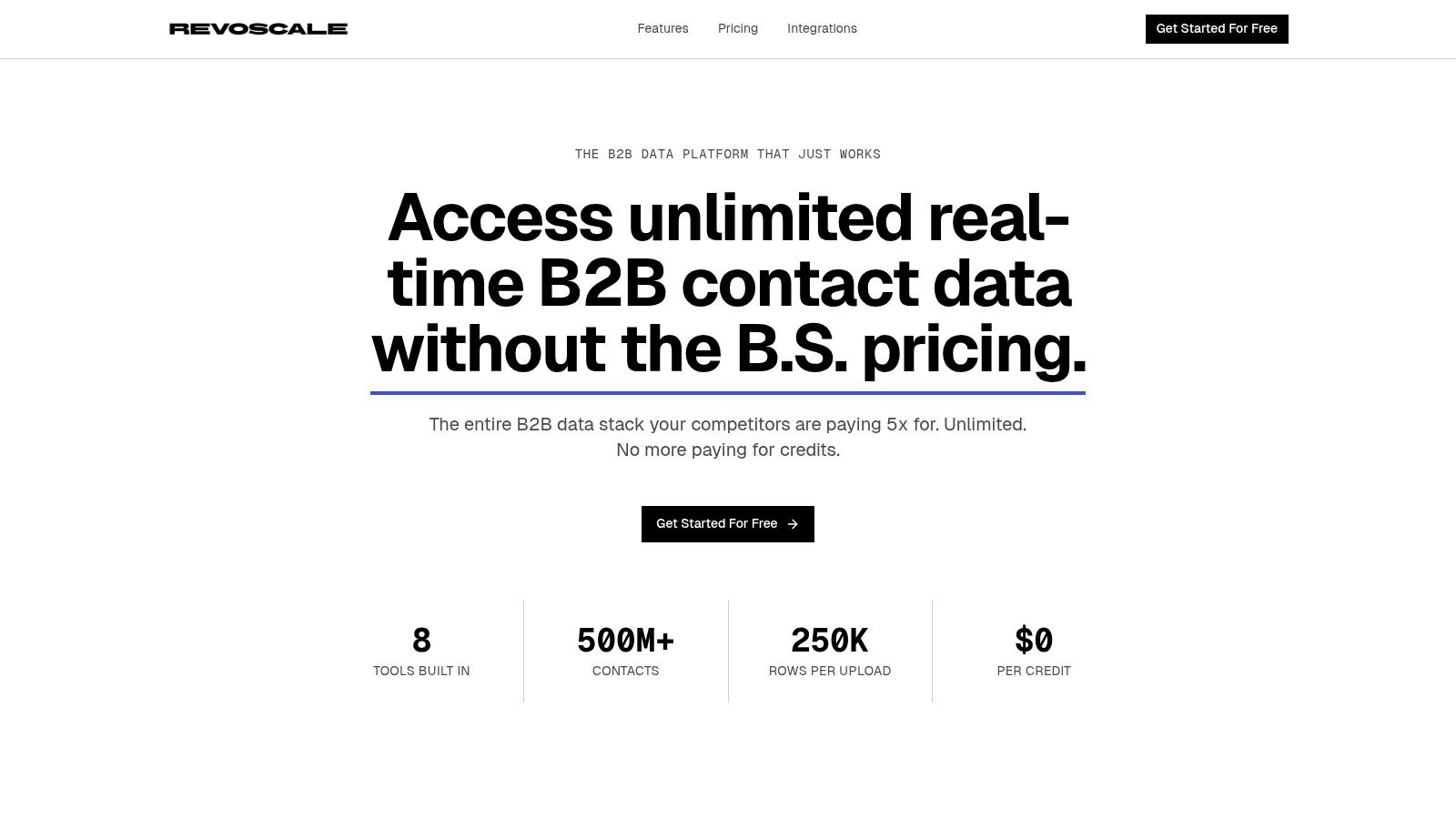
RevoScale earns the top spot by delivering an exceptional combination of accuracy, speed, and all-in-one functionality. It's a powerful, AI-native platform designed for B2B teams that need to move beyond disjointed tools and manual prospecting. RevoScale consolidates data enrichment, verification, and outbound automation into a single, unified environment.
The platform's core strength lies in its AI-driven waterfall enrichment process. Instead of relying on a single data source, RevoScale queries over 50 providers in real time, cross-validating results to achieve a reported 97%+ accuracy rate. This process enriches records with over 100 distinct data points, including direct-dial phone numbers, verified emails, firmographics, technographics, and buying intent signals. The sub-two-second average enrichment speed and high-throughput bulk processing (up to 250,000 records per list) allow teams to qualify entire account lists or clean CRM databases in minutes, not days.
Why RevoScale Stands Out
What truly sets RevoScale apart is its flat-rate, credit-free pricing model. This approach eliminates the guesswork and overage fees common with other providers. All plans include unlimited usage across a suite of eight integrated tools, from an email finder and verifier to a Google Maps scraper and mobile phone finder. This makes costs predictable and encourages full adoption across SDR, RevOps, and marketing teams without fear of hitting a usage cap.
The visual, drag-and-drop workflow builder enables end-to-end automation for processes like inbound lead routing, list building, and CRM hygiene. Additionally, unified outreach sequences for email, LinkedIn, and phone calls are built directly into the platform, giving teams a complete GTM execution engine. With enterprise-grade features like SOC 2 Type II compliance, SSO, and a REST API included on every plan, RevoScale is built to scale securely from a single user to a large organization.
Best For: RevOps, sales development teams, and agencies seeking a unified, high-accuracy platform with predictable costs to scale outbound prospecting and data management.
Pros:
- All-in-one toolkit with unlimited usage: Eight built-in tools with no credits or per-row charges.
- Fast, accurate enrichment at scale: AI waterfall delivers 97%+ accuracy and sub-2-second enrichment with large bulk uploads.
- Enterprise-ready security: Features SOC 2 Type II, SSO, RBAC, and a REST API on every plan.
- Unified outreach and automation: Visual workflows and sequenced outreach streamline pipeline execution.
Cons:
- Public-facing customer case studies are limited, potentially requiring a trial to validate outcomes for specific industries.
- Niche verticals may still find data gaps despite the broad coverage from 50+ providers.
Pricing: Starts at $49/month for individuals, with team and agency plans ranging from $99 to $349/month. A free trial is available.
Website: revoscale.io
2. ZoomInfo
ZoomInfo has positioned itself as more than just a data provider; it's an extensive go-to-market (GTM) platform. For B2B teams seeking a single vendor to handle data, enrichment, buyer intent signals, and even sales engagement, ZoomInfo offers a connected solution. Its core strength lies in a massive, frequently updated database of contact and company information, with particularly robust coverage in the United States.
The platform's real-time enrichment capabilities are a key differentiator. When a new lead enters your CRM from a form fill, ZoomInfo can instantly append dozens of data points, from job titles and direct dials to company firmographics and technographics. Beyond basic enrichment, its suite includes features like website visitor identification and workflow automation, allowing RevOps to build sophisticated lead routing and scoring processes directly within the platform.
Access to ZoomInfo is exclusively quote-based, with pricing determined by user licenses, data credit volume, and selected feature packages. Contracts are typically annual, which can be a significant commitment for smaller businesses.
Best For: Enterprise and mid-market sales and marketing teams that need an all-in-one GTM platform with strong US data and have the operational resources to manage a complex contract and credit-based system.
Pros: Broad enterprise GTM feature set in one platform; very strong US coverage and partner ecosystem.
Cons: Quote-based pricing and add-ons can raise total cost; long contracts and plan complexity can be heavy for SMBs.
Website: zoominfo.com
3. Apollo.io
Apollo.io has carved out a powerful niche by combining data enrichment with a full-featured sales engagement platform. Where many tools focus solely on providing data, Apollo integrates lead sourcing, contact and company enrichment, sequencing, a dialer, and analytics into one cohesive workflow. This makes it an exceptionally strong choice for outbound sales teams, especially SDRs, who want to find prospects and begin outreach without switching between multiple applications.
A user can build a target list using filters like buying intent signals, enrich those contacts in bulk, and immediately enroll them in an email or call sequence. Apollo stands out with its transparent, self-serve pricing tiers, which are more accessible compared to enterprise-only platforms. For teams focused on efficient outbound motions, this removes the friction of exporting data from one tool and importing it into another, like you would when learning how to use other tools for cold email outreach.
Best For: SMBs and mid-market outbound sales teams (SDRs/BDRs) who need an affordable, all-in-one solution for prospecting, enrichment, and sales engagement without the complexity of enterprise contracts.
Pros: Combines data and outreach tools for a seamless workflow; transparent pricing with self-serve options is great for fast adoption.
Cons: Credit system can be confusing as phone data costs more; advanced features like international dialing require higher-priced tiers.
Website: apollo.io
4. Clearbit by HubSpot
Once a standalone titan in the data enrichment space, Clearbit's acquisition by HubSpot has redefined its position in the market. It now serves as a deeply integrated data layer within the HubSpot ecosystem, offering powerful enrichment capabilities natively to users of the platform. For B2B teams committed to HubSpot as their central GTM hub, this makes Clearbit an excellent choice.
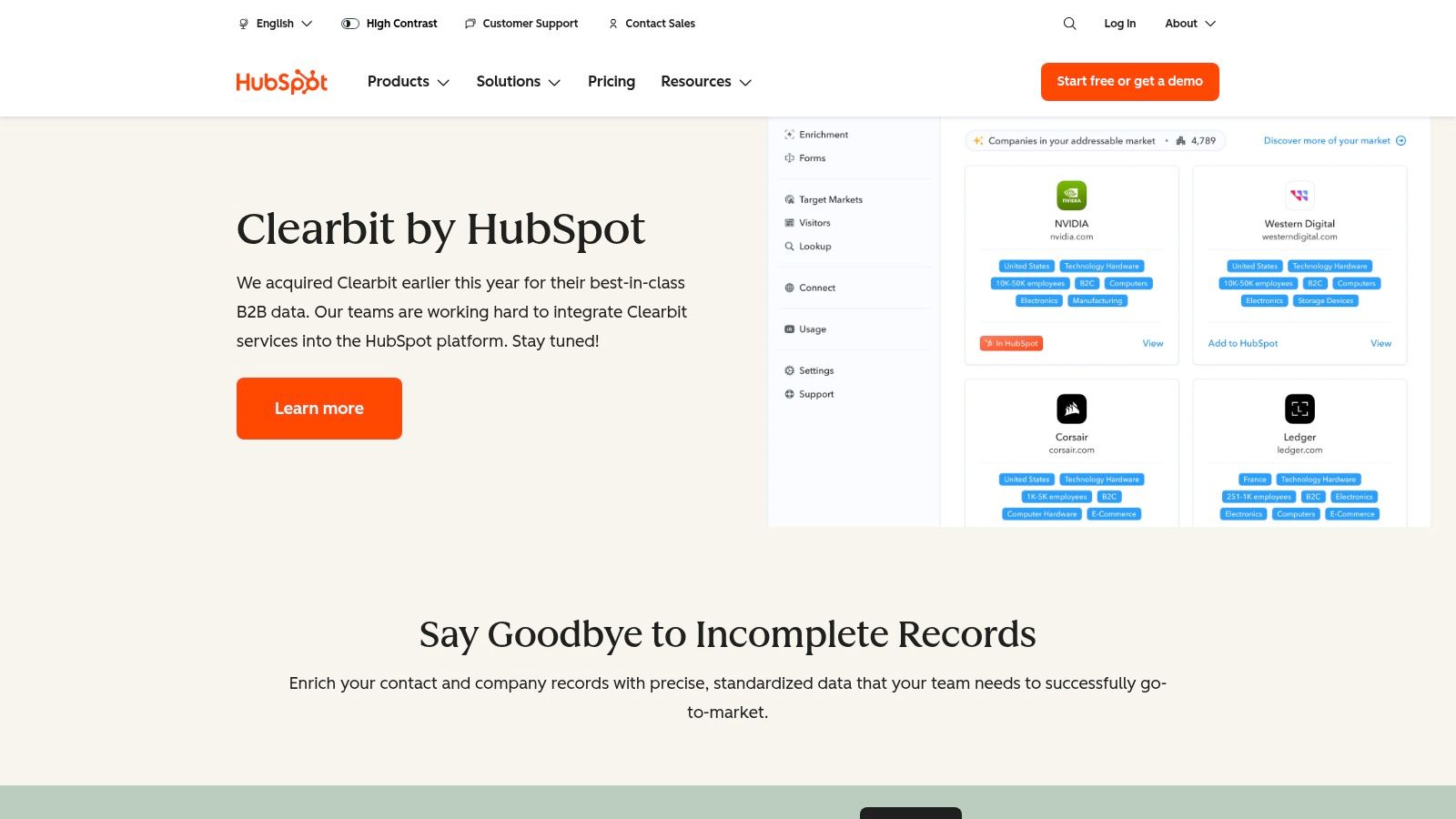
The platform's core strength is its seamless ability to enrich contact and company records directly within HubSpot upon creation. It appends over 100 B2B attributes, including firmographics, technographics, and employee details. A standout feature is its form-shortening capability, which automatically enriches lead data from just an email address.
Access to Clearbit's functionality is now bundled within specific HubSpot plans and is no longer available as a new standalone subscription.
Best For: B2B companies fully standardized on the HubSpot platform who want native, hassle-free data enrichment to power their marketing automation, sales sequences, and lead scoring.
Pros: Seamless native integration for HubSpot users; mature and reliable data model.
Cons: No new standalone subscriptions are offered; non-HubSpot users must consider other vendors.
Website: hubspot.com/products/clearbit
5. Lusha
Lusha has earned its reputation as one of the most accessible and SDR-friendly contact data platforms. It shines with its self-serve model, straightforward credit system, and powerful browser extension, making it a go-to for sales teams that need to quickly find accurate B2B contact details without the friction of a lengthy sales process.
The platform's transparent, credit-based model is a key differentiator. Users get a clear understanding of their usage, with one credit typically revealing an email and more credits used for a phone number. Lusha offers a generous free tier with monthly credits, making it easy to test its accuracy.
Best For: SDRs and outbound sales teams in SMBs and mid-market companies who need a fast, self-serve tool for contact discovery and have a predictable, credit-based budget.
Pros: Low barrier to start with a generous free tier; transparent credit pricing makes cost expectations clear.
Cons: Credits can deplete quickly for phone-heavy teams; API and advanced features require Scale or custom plans.
Website: lusha.com
6. Cognism
Cognism distinguishes itself with a compliance-first approach to B2B data, making it a standout choice for teams that prioritize accuracy and adherence to regulations. Its core differentiator is "Diamond Data," a proprietary set of phone-verified mobile numbers. This manual verification process results in exceptionally high-quality direct dials, reducing wasted time for SDRs.
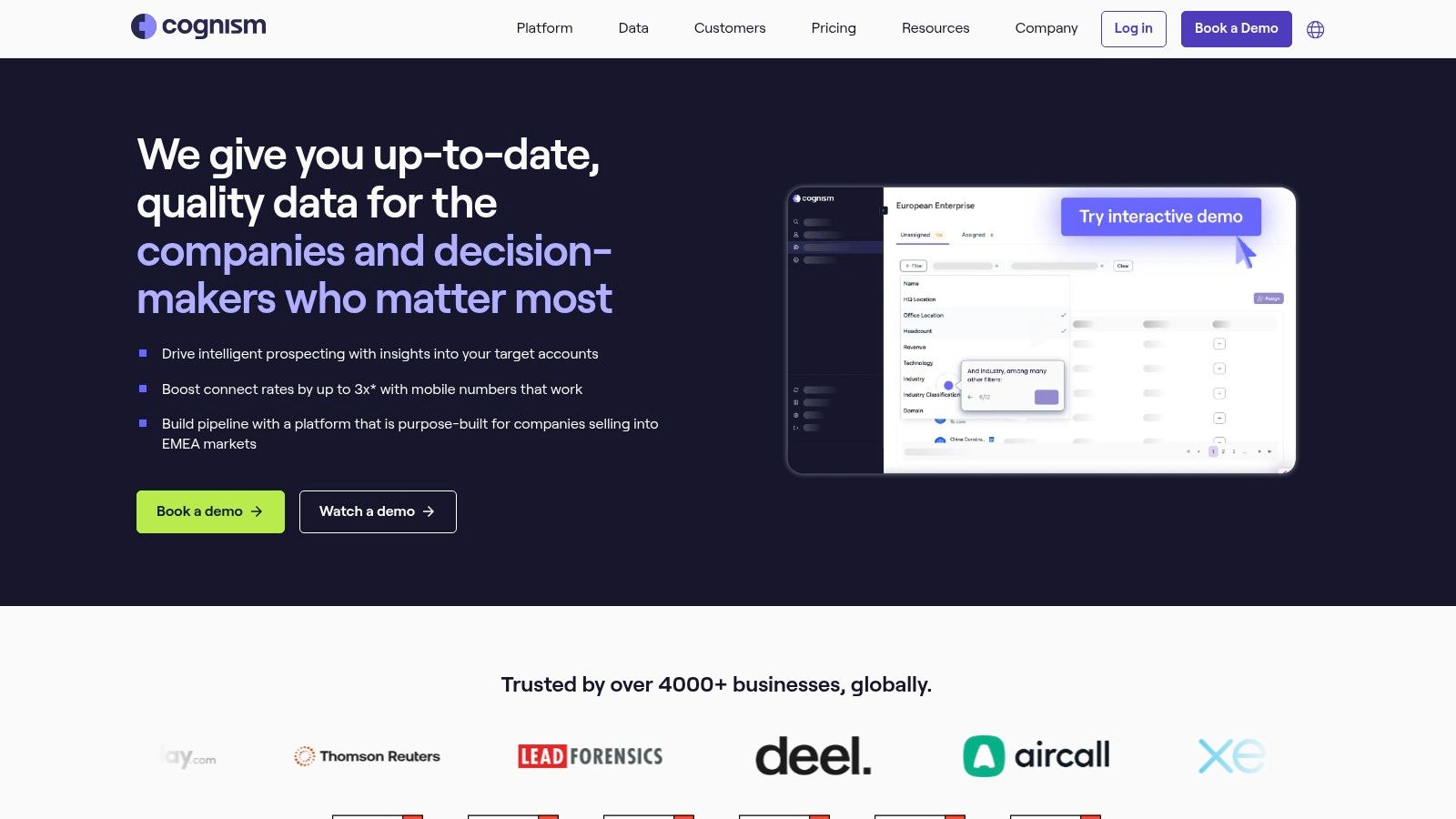
The platform is particularly robust for organizations operating in or targeting EMEA, offering strong data coverage and built-in screening against DNC registries in the US, UK, and multiple European countries.
Best For: Outbound sales teams and global organizations that require high-quality, phone-verified mobile numbers and a strong data compliance posture, especially for calling into EMEA markets.
Pros: High-quality verified mobiles and strong compliance posture; good EMEA coverage suitable for cross-border teams.
Cons: Annual, quote-based pricing with a higher entry point; exports and API volumes can be governed by fair-use policies.
Website: cognism.com
7. SalesIntel
SalesIntel differentiates itself with a strong emphasis on human-verified data, aiming to boost accuracy and connect rates for outbound sales teams. Its primary strength lies in providing high-quality, 95% accurate direct-dial phone numbers and email addresses, which are re-verified every 90 days.
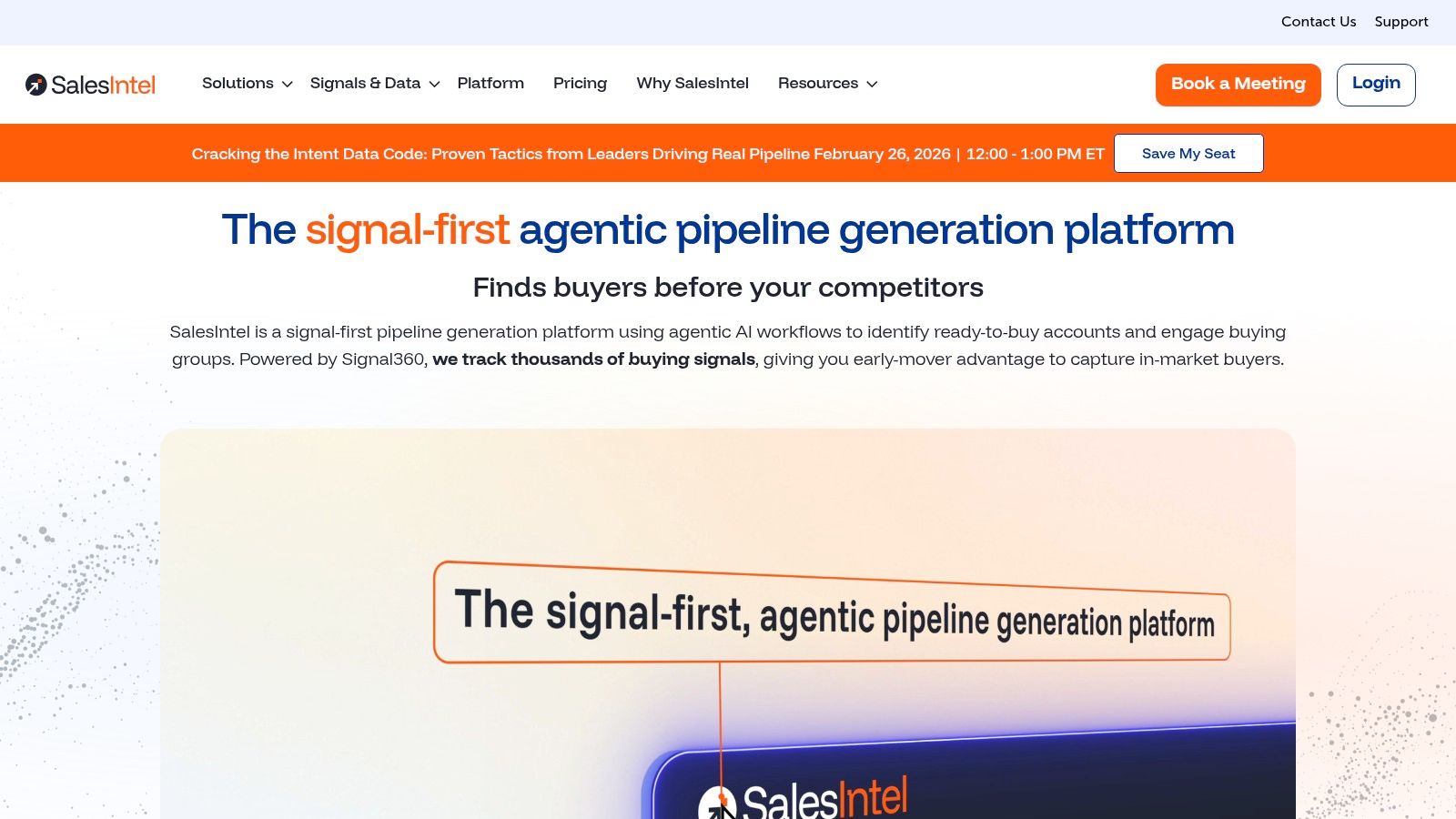
The platform's Research-on-Demand service is a notable feature. If a specific contact isn't in their database, users can submit a request, and SalesIntel's human research team will find and verify the information, typically within a few hours.
Best For: Outbound sales teams and SDRs that prioritize call connection rates and want the assurance of human-verified data, plus the flexibility of on-demand research for hard-to-find contacts.
Pros: Predictable spend model that avoids credit anxiety; human verification focus improves accuracy for calling.
Cons: Must request pricing; feature breadth is smaller than full go-to-market suites.
Website: salesintel.io
8. UpLead
UpLead offers a clean, self-serve approach to B2B data, positioning itself as a reliable source for teams that value transparency and accuracy. It stands out by providing a database with real-time email verification, ensuring users only pay for validated results.
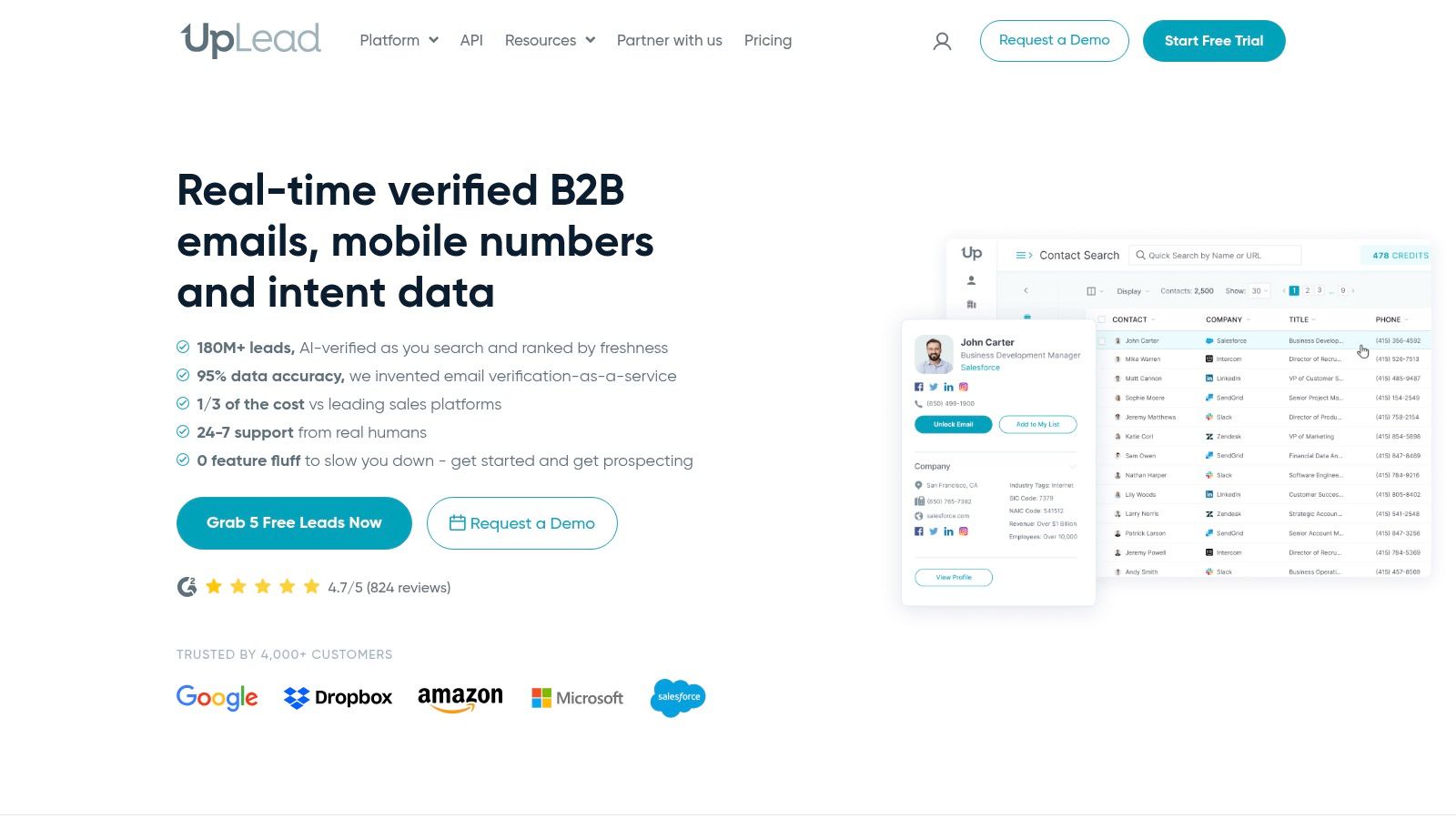
The platform is particularly well-suited for both manual list building and automated enrichment. Users can enrich a CSV file or use UpLead's developer-friendly API to feed data directly into their systems, appending over 50 data points for person and company profiles.
Best For: SMBs, startups, and sales teams that need a straightforward, pay-for-what-you-get data enrichment solution with a strong, easy-to-implement API and transparent pricing.
Pros: Clear pricing tiers and strong API documentation; easy trial and straightforward developer experience.
Cons: Smaller ecosystem compared to all-in-one GTM suites; phone number coverage may require higher tiers.
Website: uplead.com
9. LeadIQ
LeadIQ is built for speed and efficiency, focusing on the frontline prospecting workflow. It operates primarily as a capture tool that allows SDRs to quickly find and verify contact data directly from sources like LinkedIn and then push that clean information into a CRM or sales engagement platform with minimal friction.
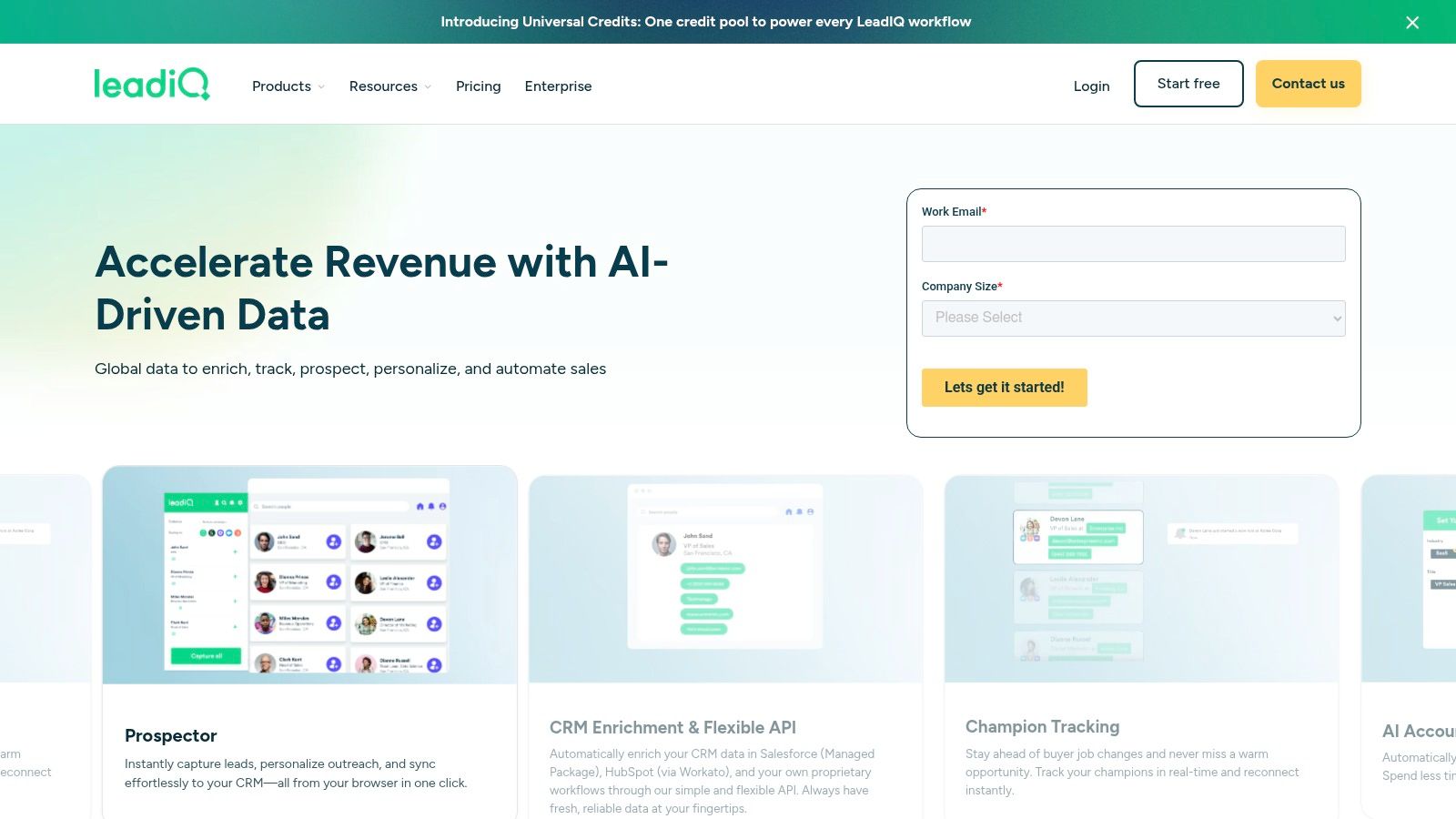
The platform's Chrome extension is central to its user experience, enabling reps to capture emails and mobile numbers while browsing prospect profiles. Rather than just enriching existing records, LeadIQ is designed to create new, enriched contacts from scratch and sync them instantly.
Best For: High-velocity outbound sales teams and SDRs who need a fast, simple way to build lists, capture contact data from the web, and sync it directly into their sales tools without manual data entry.
Pros: Very fast for building lists and capturing data into CRMs; clear credit system and flexible self-serve options.
Cons: Credit-based usage can become costly for heavy phone dialing; database access and features may be limited on lower tiers.
Website: leadiq.com
10. RocketReach
RocketReach serves as a massive professional directory focused primarily on email and phone number discovery. It's an accessible starting point for teams needing ad-hoc contact lookups or building prospecting lists from scratch. Its strength lies in its simplicity and speed, allowing users to quickly find contact information for specific individuals.
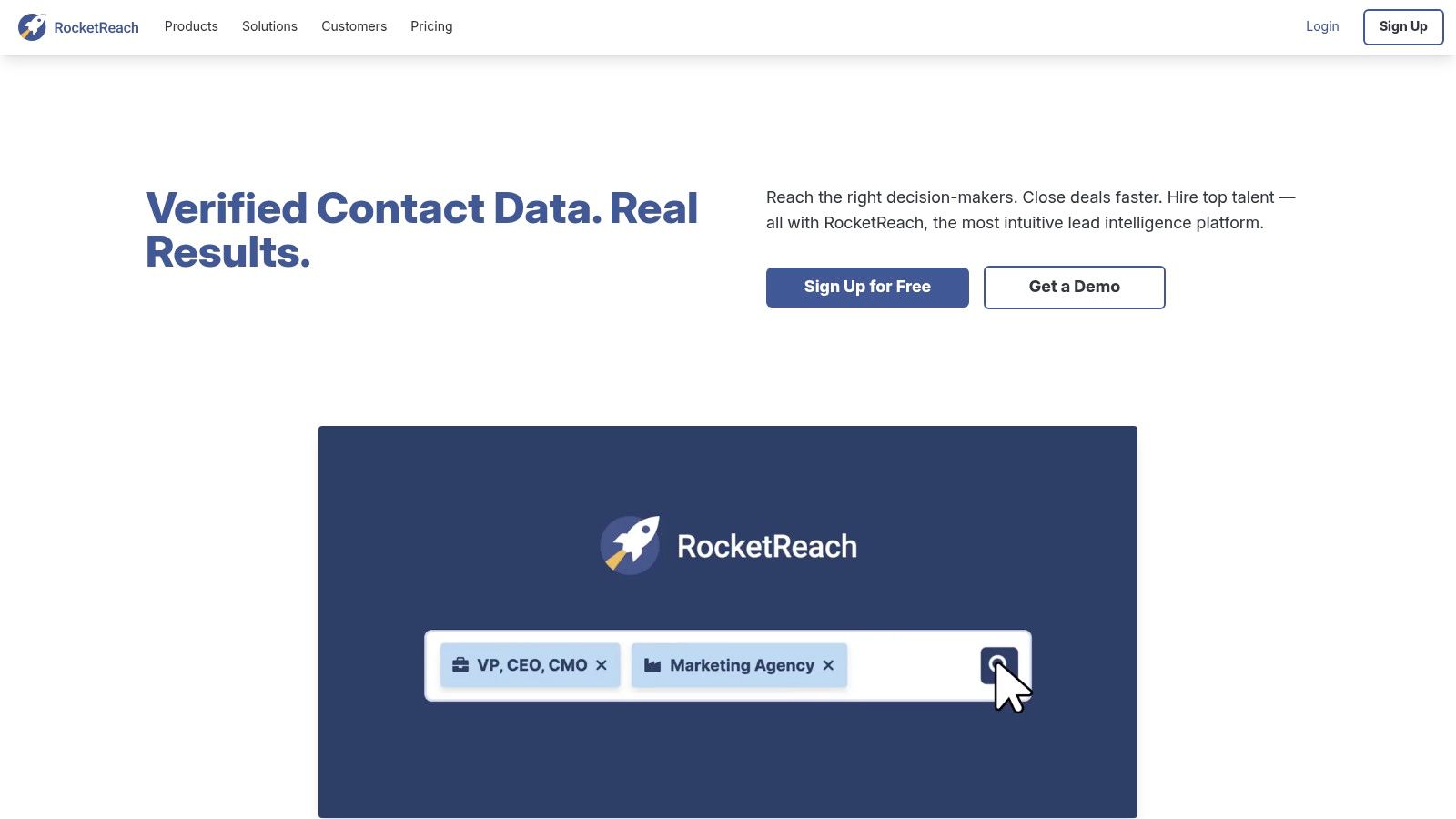
The platform operates on a credit-based lookup system, with a popular Chrome extension that lets sales reps find contact data directly from LinkedIn profiles or company websites. Higher-tier plans add light enrichment capabilities, including company technographics and organizational charts.
Best For: SDRs, recruiters, and small sales teams needing a simple, fast tool for direct contact discovery and list building, especially when a full-scale enrichment platform is too complex or costly.
Pros: Simple to test with free lookups and a fast UI; competitive entry pricing for email-only tiers.
Cons: Credit caps and advanced features/API access are on upper tiers only; data quality can be mixed.
Website: rocketreach.co
11. People Data Labs (PDL)
People Data Labs operates differently from most sales-focused providers by positioning itself as a developer-centric identity graph. It is built for engineering and operations teams that need programmatic access to person and company data via APIs. Instead of a pre-built user interface, PDL provides a set of powerful APIs for enrichment and search.
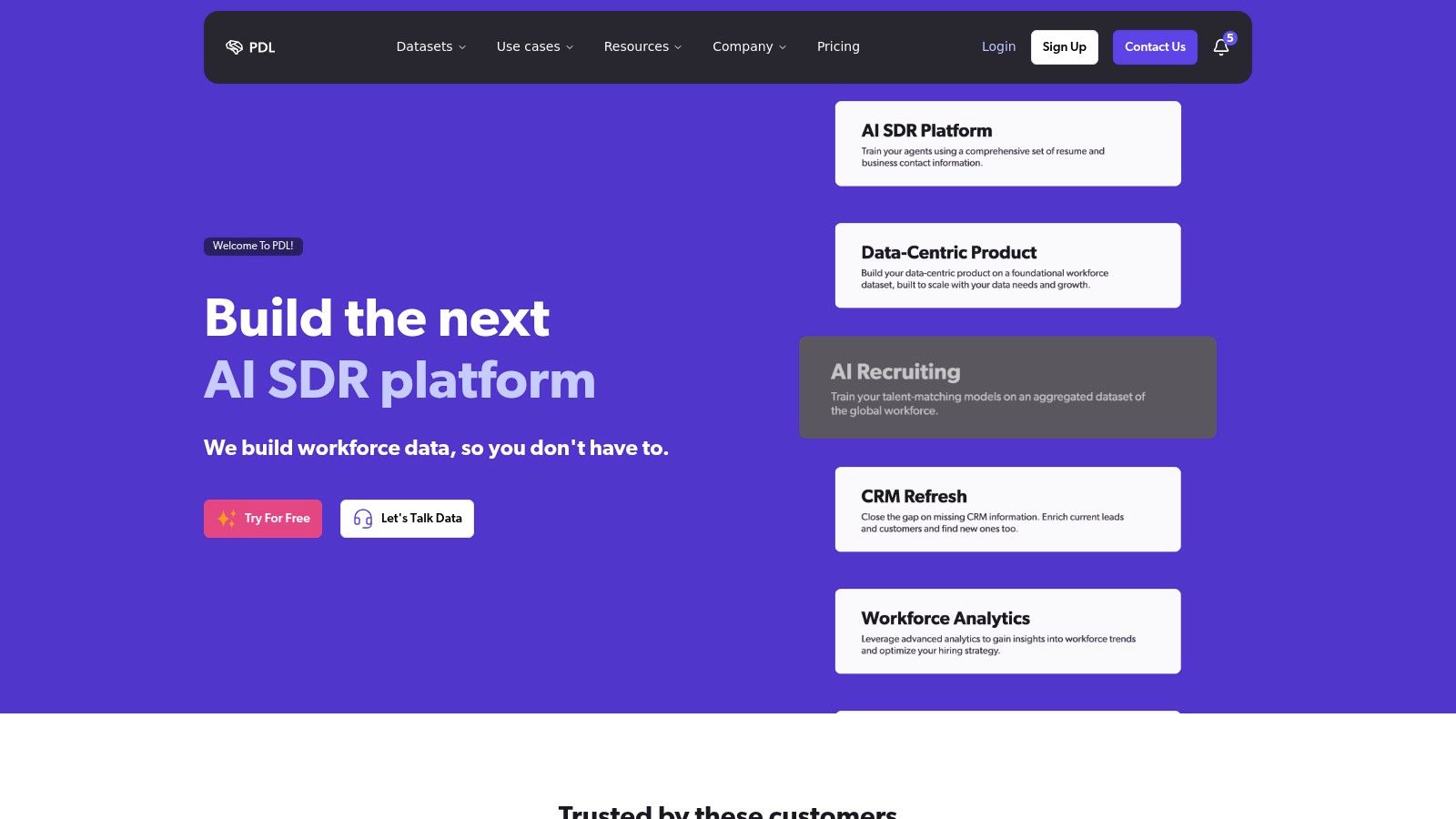
The platform's API-first approach gives developers granular control over data retrieval. You can perform real-time enrichment on a single email or social profile, or use bulk endpoints to process millions of records efficiently.
Best For: Engineering and RevOps teams at tech companies that need a flexible, API-driven data source for building custom enrichment workflows or embedding person and company data into their own products.
Pros: Transparent credit-based pricing and excellent developer documentation; API-first design enables custom logic and product integration.
Cons: Requires developer or technical ops ownership to implement; data attributes and coverage may differ from sales-native platforms.
Website: peopledatalabs.com
12. Hunter
Hunter is an email-centric discovery and verification platform that excels at one thing: finding and validating professional email addresses at scale. While many competitors try to be an all-in-one contact database, Hunter maintains a sharp focus on email-first workflows, making it a strong choice for teams prioritizing outbound email campaigns.
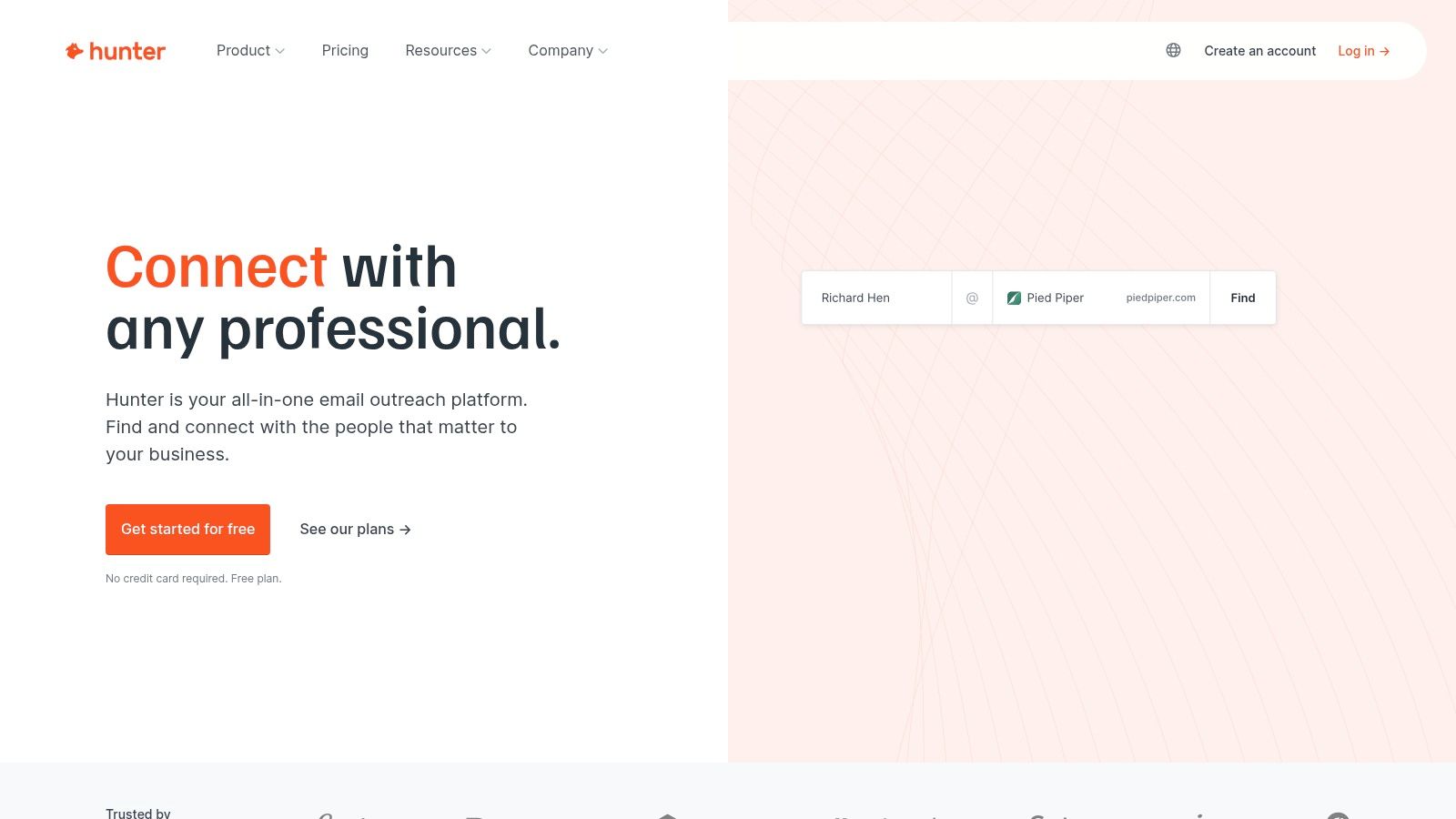
The platform's standout feature is its transparent, predictable credit system. You only pay for successful finds or verifications, which removes the risk of burning credits on bad data. Hunter has also expanded its offering to include simple outreach sequences with AI-powered writing assistance and account rotation. You can explore a variety of other options, including some that offer an unlimited email finder, to see how different tools compare on pricing and features.
Best For: Sales and marketing teams that need a reliable, high-volume email finding and verification tool with straightforward pricing, and for agencies managing outbound campaigns for multiple clients.
Pros: Very transparent pricing and credit rules; only pay when found/verified; strong for high-volume email verification.
Cons: Phone/direct-dial data is not a focus; data scope is narrower than full contact databases; intent/firmographics are limited.
Website: hunter.io
From Data to Deals: Making Your Final Decision
Selecting the right data enrichment tool is less about finding a single, universally "best" platform and more about identifying the perfect match for your team's specific go-to-market motion, operational structure, and budget realities.
The right choice fundamentally depends on your most critical business need. A large enterprise deeply integrated with the HubSpot ecosystem will find Clearbit's native functionality exceptionally valuable. Conversely, a sales team executing high-volume, phone-first outreach campaigns will see a greater return from Cognism's phone-verified mobile numbers.
How to Structure Your Evaluation Process
- Define Your Success Metrics: Before you even start a trial, determine what a successful outcome looks like. Is it a 20% increase in connect rates? A 50% reduction in time spent on manual research?
- Shortlist 2-3 Vendors: Based on the detailed reviews in this guide, select a few top contenders that align with your budget, core use case, and existing tech stack.
- Run a Controlled Pilot: Provide each vendor with the same sample list of accounts or contacts from your CRM. This creates a standardized benchmark for comparing data accuracy and fill rates.
- Evaluate the User Experience: Involve your end-users. How intuitive is the platform? How easily does it integrate with their daily tools like Salesforce or Outreach?
- Challenge Their Support: Ask tough questions about data sourcing methodologies, refresh cadences, and compliance protocols.
Key Factors for Your Final Scorecard
- Data Accuracy & Coverage: Which tool consistently provided the most accurate direct dials, verified emails, and detailed firmographics for your specific ICP?
- Integration & Workflow: How smoothly does the tool plug into your CRM and sales engagement platforms?
- Pricing Model vs. Value: Does the pricing model align with your team's usage patterns? A credit-based system might be costly for a high-volume SDR team, whereas a flat-rate model like RevoScale's offers predictability.
- Implementation and Onboarding: What level of support does the vendor offer to get your team up and running?
Ultimately, investing in the right data enrichment tool is an investment in a more intelligent, efficient, and predictable pipeline. The right platform will transform your raw data from a passive database into your most active and valuable strategic asset.
Tired of juggling separate tools for prospecting, enrichment, and outreach while worrying about credit limits? RevoScale integrates unlimited B2B data enrichment directly into a powerful sales engagement platform. Start free today.